Home EV charging
EV Charger Installation in Ealing (W5 & W13)
Planning a home EV charger in Ealing? We install domestic charging points with attention to the existing electrical supply, charger position, cable route, circuit protection, testing and a neat finished installation.
Every property is different. Before installation, the electrical arrangement and proposed charging location should be assessed so the new EV circuit is designed for the property rather than treated as a one-size-fits-all job.
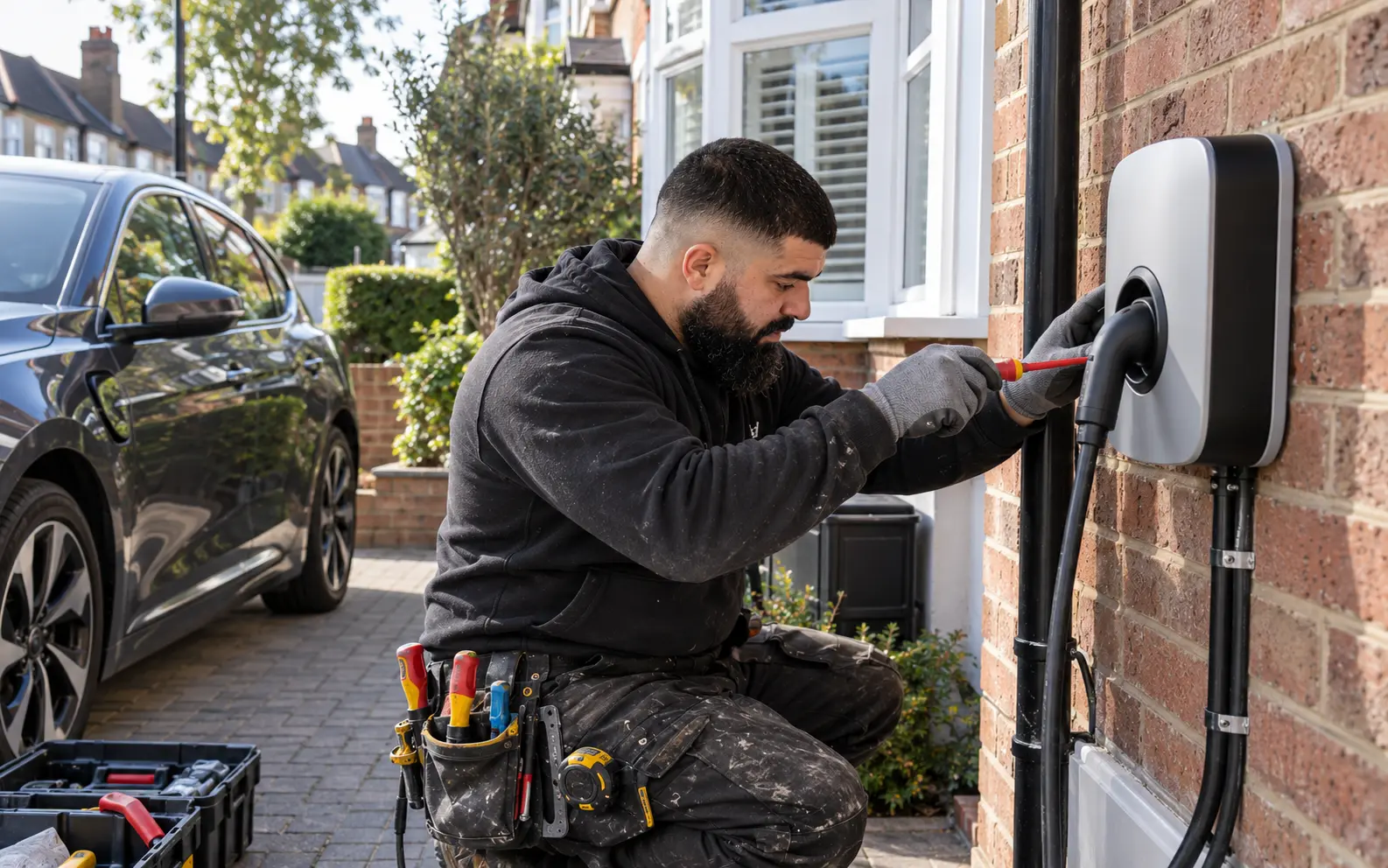
From survey to handover
Home EV Charger Installation in Ealing
A dedicated home charging point can provide a practical way to charge an electric vehicle on a driveway or other suitable off-street parking area. The installation is more than simply fixing a wallbox to the wall: the new circuit has to be considered alongside the property's electrical supply, existing distribution equipment, earthing arrangement and the route between the consumer unit and charger.
Electrical assessment
We consider the existing supply, consumer unit and available capacity before deciding how the EV charging circuit should be arranged.
Charger position
The wallbox should be convenient for the vehicle while allowing a sensible, tidy cable route and avoiding unnecessary obstruction around the driveway.
Installation & testing
The dedicated circuit, protection and charger are installed and the completed electrical work is tested and commissioned as appropriate.
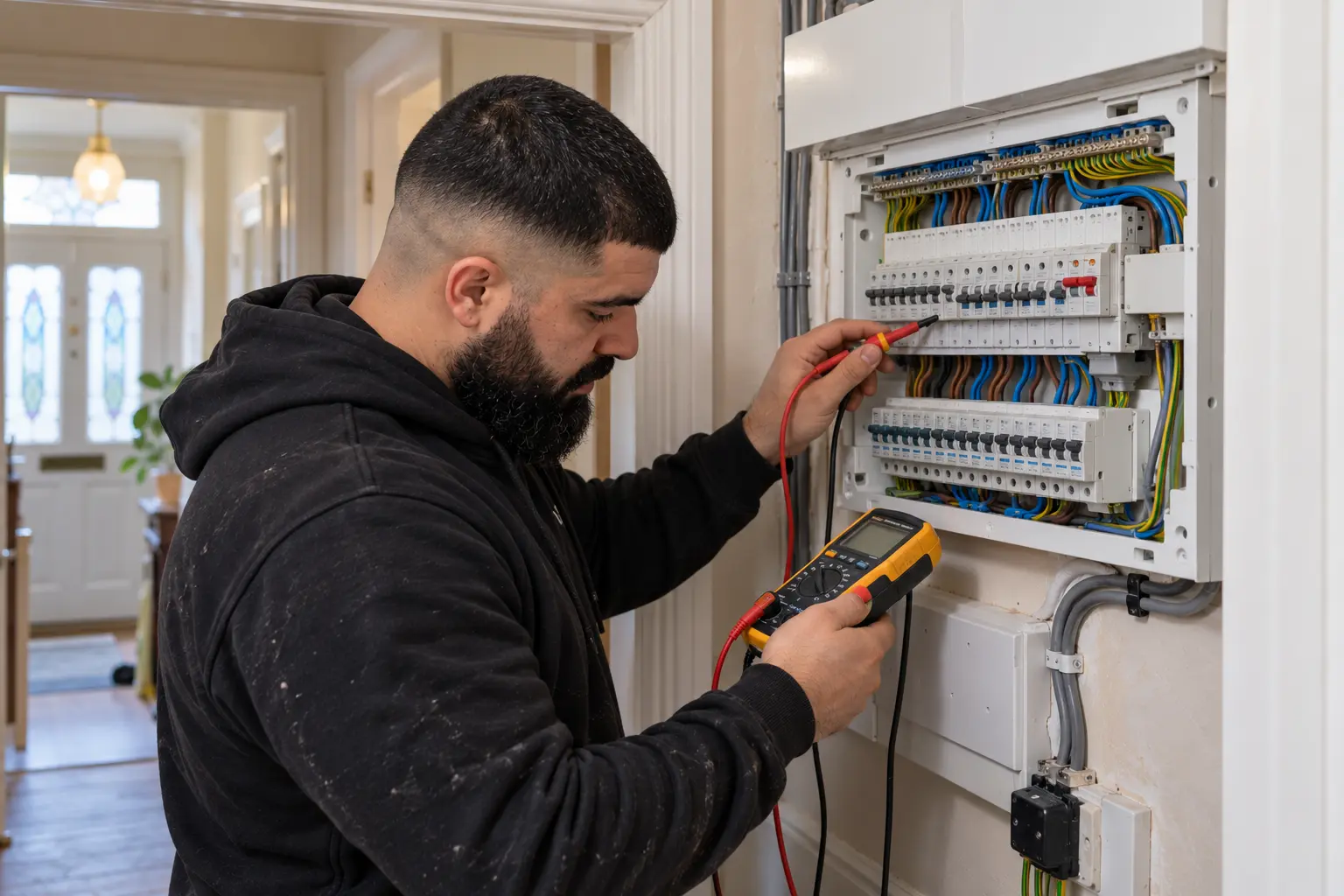
Before installation
Pre-Installation Electrical Assessment
Before fitting an EV charging point, the proposed installation needs to be considered in the context of the property. This includes the incoming supply, existing consumer unit, available electrical capacity, earthing arrangement and the distance to the proposed charger position.
The assessment also helps identify whether there is suitable space for the new dedicated circuit and whether any additional electrical work is needed. An older consumer unit does not automatically mean it must be replaced simply because an EV charger is being installed.
Where the existing installation raises a separate condition concern, we can explain the next step. A broader inspection is covered on our EICR Ealing page, while fuse-board upgrades are covered separately under Consumer Unit Replacement Ealing.
If assessment identifies wider ageing or unsuitable wiring beyond the EV circuit itself, that is a separate scope of work. See our House Rewiring Ealing page for information about broader replacement work.
Planning the installation
Choosing the Charger Location & Cable Route
The best charger position depends on where the vehicle normally parks, the location of the electrical supply and the practical cable route. For many Ealing homes, a wall beside a private driveway is the most straightforward option, but the route back to the consumer unit still needs to be planned properly.
Cable routing may involve suitable external containment or another appropriate route through the property. The objective is a secure, durable installation with the cable protected and positioned neatly rather than an unnecessarily intrusive route.
From assessment to handover
Our EV Charger Installation Process
Assess the property
We review the proposed charger location, existing electrical supply, consumer unit, available capacity and relevant earthing arrangements.
Plan the charger & cable route
We agree a practical charger position and plan a suitable route for the dedicated electrical circuit with a neat finished installation in mind.
Install the circuit & charger
The required circuit protection, cabling and charging equipment are installed to suit the property and the selected charger.
Test & commission
The completed electrical work and charging equipment are tested and commissioned as appropriate to the installation.
Handover
We explain the charger controls and provide the electrical documentation and installation information applicable to the work carried out.
Supply & demand
Electrical Supply, Available Capacity & Load Management
Home EV charging adds a significant electrical load, so available capacity should be considered before installation. The assessment looks at the existing supply and the other electrical demands in the property rather than assuming every home has the same spare capacity.
Where required, smart load management can limit or adjust charging demand so that the EV charger works sensibly alongside other household loads. This can be particularly useful where the available supply needs to be managed or where future requirements such as a second electric vehicle are being considered.
Some installations may also involve notification to, or coordination with, the relevant electricity network operator depending on the equipment and supply circumstances. Any network-related requirement should be identified as part of planning the installation.
Dedicated circuit protection
Consumer Unit & Protective Devices
An EV charger normally requires a dedicated circuit with protection selected for the charging equipment and installation design. The exact arrangement depends on the charger, the existing consumer unit and the protective features incorporated within the equipment.
If the consumer unit has suitable capacity and can accommodate the required arrangement, wholesale replacement may not be necessary. Where there is insufficient space or the existing equipment is unsuitable for the proposed work, an appropriate additional enclosure or other alteration may be considered.
Electrical safety
Earthing & EV Charging Safety
EV charging equipment installed outdoors requires careful consideration of earthing and protection against electrical faults. The property's earthing arrangement is therefore checked as part of the installation design, with the protective measures selected to suit the supply and charging equipment.
Modern charging equipment may incorporate protective functions, while other installations require additional protective devices. The correct solution should be determined from the actual equipment and electrical arrangement rather than relying on a generic specification.
The work should comply with the applicable requirements of BS 7671, including the requirements relevant to electric vehicle charging installations.
Connected charging
Smart Charging & Future Requirements
Home charge points placed on the market in Great Britain are subject to smart-charge-point requirements where the regulations apply. Smart functionality can support scheduled charging and help customers make use of suitable off-peak charging periods, depending on their charger, vehicle and electricity tariff.
Load management may also be relevant where household demand needs to be controlled. If you are considering solar generation, more than one EV or another significant future electrical load, tell us during the planning stage so the installation can be considered in that wider context.
Completed installation
Testing, Commissioning & Handover
Once the charger and its electrical circuit have been installed, the electrical work is tested as appropriate to the installation. Commissioning also confirms that the charging equipment operates correctly and that the relevant protective arrangements function as intended.
The handover should include the information needed to operate the charger and understand its controls or smart features. The electrical documentation and any Building Regulations notification applicable to the work should match the installation route and work actually carried out.
If certification or notification arrangements are important to your project, they should be confirmed as part of the quotation before work begins.
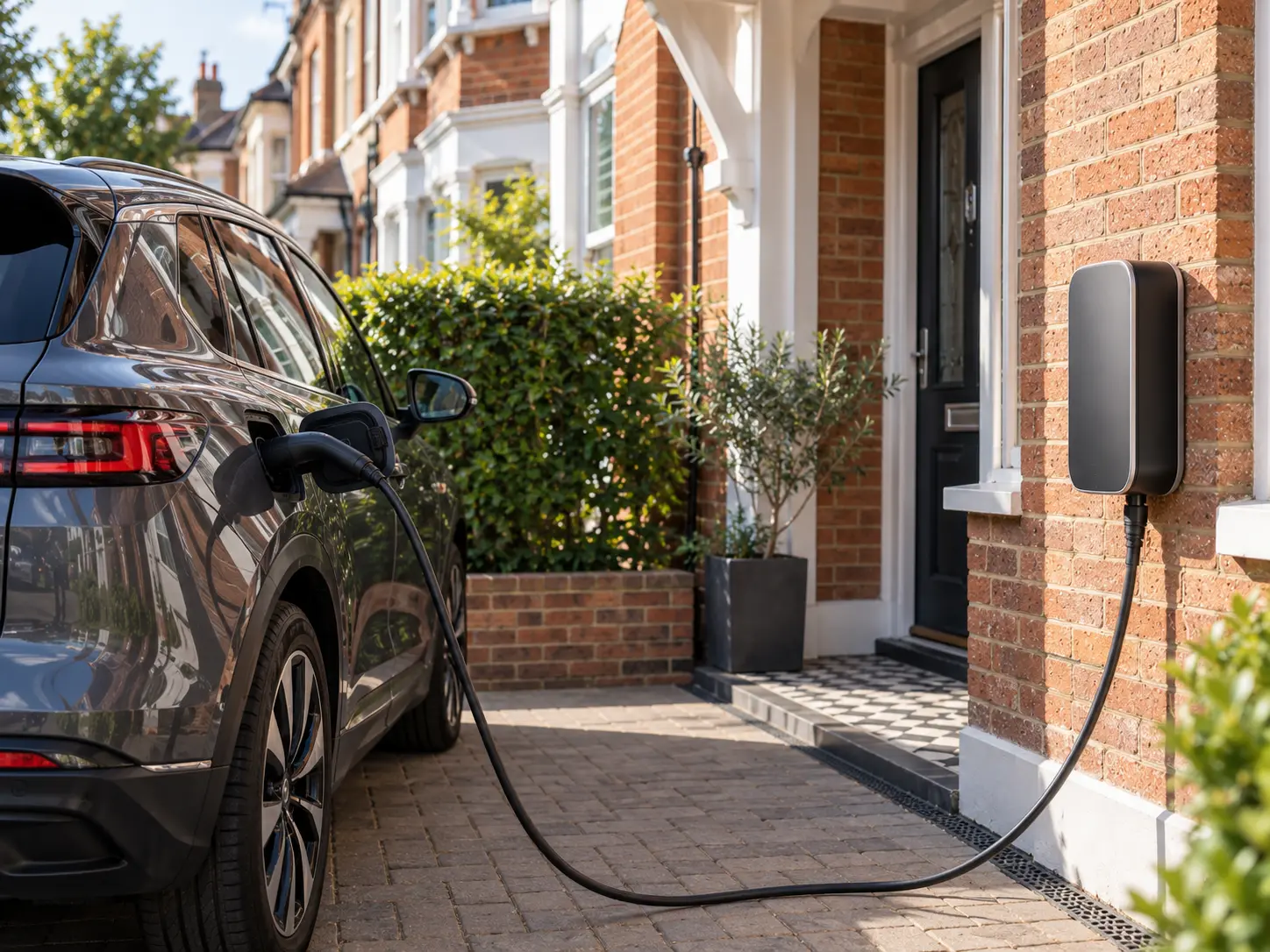
UK requirements
BS 7671, Part P & EV Charger Regulations
EV charging installations need to be designed and installed with the current requirements of BS 7671 in mind, including the provisions that apply specifically to electric vehicle charging. Domestic electrical work may also fall within the notification requirements of Part P of the Building Regulations in England, depending on the work undertaken and the compliance route used.
Separate regulations apply to smart charge points sold for private use in Great Britain. Because standards, equipment and government schemes can change, the exact requirements should be checked against the current rules and the charger selected for the installation rather than relying on outdated specifications.
Installation cost
What Affects EV Charger Installation Cost?
The cost of an EV charger installation depends on the property and scope rather than simply the wallbox itself. Important factors include the charger selected, cable length, route and containment, distance from the consumer unit, existing circuit capacity, protective equipment, mounting location and whether additional electrical or building work is required.
For this reason, we do not publish an invented universal installation price. Send us details of the property, parking position and proposed charger location so the installation can be considered properly before a quote is agreed.
Government EV chargepoint grants may be available to certain eligible groups and property types, but eligibility and grant values can change. We do not promise grant eligibility; customers considering a grant should check the current GOV.UK scheme conditions and any requirement to use an OZEV-authorised installer.
Planning a Home EV Charger?
Tell us your Ealing postcode, where the vehicle parks and where you would like the charger positioned. If you have already chosen a charger, include the make and model, and tell us whether you are planning for one or more EVs. Photos of the consumer unit, meter area and proposed charger location can help with the initial discussion.
Local EV charger installation
EV Charger Installation Across Ealing, W5 & W13
We provide home EV charger installation across Ealing, including Ealing Broadway, West Ealing, South Ealing, Ealing Common and Northfields. The service is focused on domestic charging installations and the electrical work required to connect them safely and neatly.
For other household electrical installation work, see our Domestic Electrician Ealing service.
Frequently asked questions
EV Charger Installation FAQs
Do I need a new consumer unit to install an EV charger?
Not automatically. The existing consumer unit, available space and protective arrangements should be assessed first. If an upgrade is genuinely required, it can be discussed separately rather than assumed for every installation.
Where is the best place to install a home EV charger?
Usually somewhere convenient to the normal parking position while allowing a suitable electrical cable route. The final location also needs to consider accessibility, cable management, the building and the charger's installation requirements.
Can my electrical supply handle an EV charger?
That depends on the supply and existing household demand. The available capacity should be assessed before installation, and load management may be considered where it is useful.
Do I need to contact the DNO before installing an EV charger?
That depends on the charger, the property's electrical supply and the installation circumstances. Any requirement to notify or coordinate with the relevant electricity network operator should be identified during the assessment and planning of the installation.
Does an EV charger installation need Part P notification?
Domestic EV charger work can involve Building Regulations requirements in England. The correct notification and certification route depends on the electrical work carried out, so this should be confirmed for the proposed installation before work starts.
Can I get an EV chargepoint grant in Ealing?
Some government schemes may support eligible renters, flat owners, landlords or other qualifying situations, subject to the rules in force at the time. Eligibility is not automatic, and schemes can change, so check the current GOV.UK conditions and authorised-installer requirements before relying on a grant.
How long does a home EV charger installation take?
The time depends on the cable route, charger location, existing electrical installation and whether additional work is required. A straightforward installation and a property requiring supply or distribution alterations should not be treated as the same job.
Can I install an EV charger myself?
A home EV charger involves a dedicated electrical circuit, protective measures, testing and potentially Building Regulations requirements. It should be treated as professional electrical installation work rather than a DIY wiring project.
Related electrical services
Related Services in Ealing
Discuss Your EV Charger Installation
Tell us about your vehicle, parking position and property in Ealing. We can discuss the proposed charger location and the electrical work that may be required.