Electrical diagnosis & repairs
Electrical Fault Finding & Repair in Ealing (W5 & W13)
Tripping circuits, failed sockets, flickering lights and partial power loss can have several possible causes. We provide electrical fault finding in Ealing, W5 and W13 to identify the problem before deciding what repair is actually required.
Fault finding should be systematic rather than based on guesswork. The aim is to narrow the problem to the affected circuit, accessory, equipment or wiring, explain the findings clearly and then agree the appropriate repair.
Common electrical problems
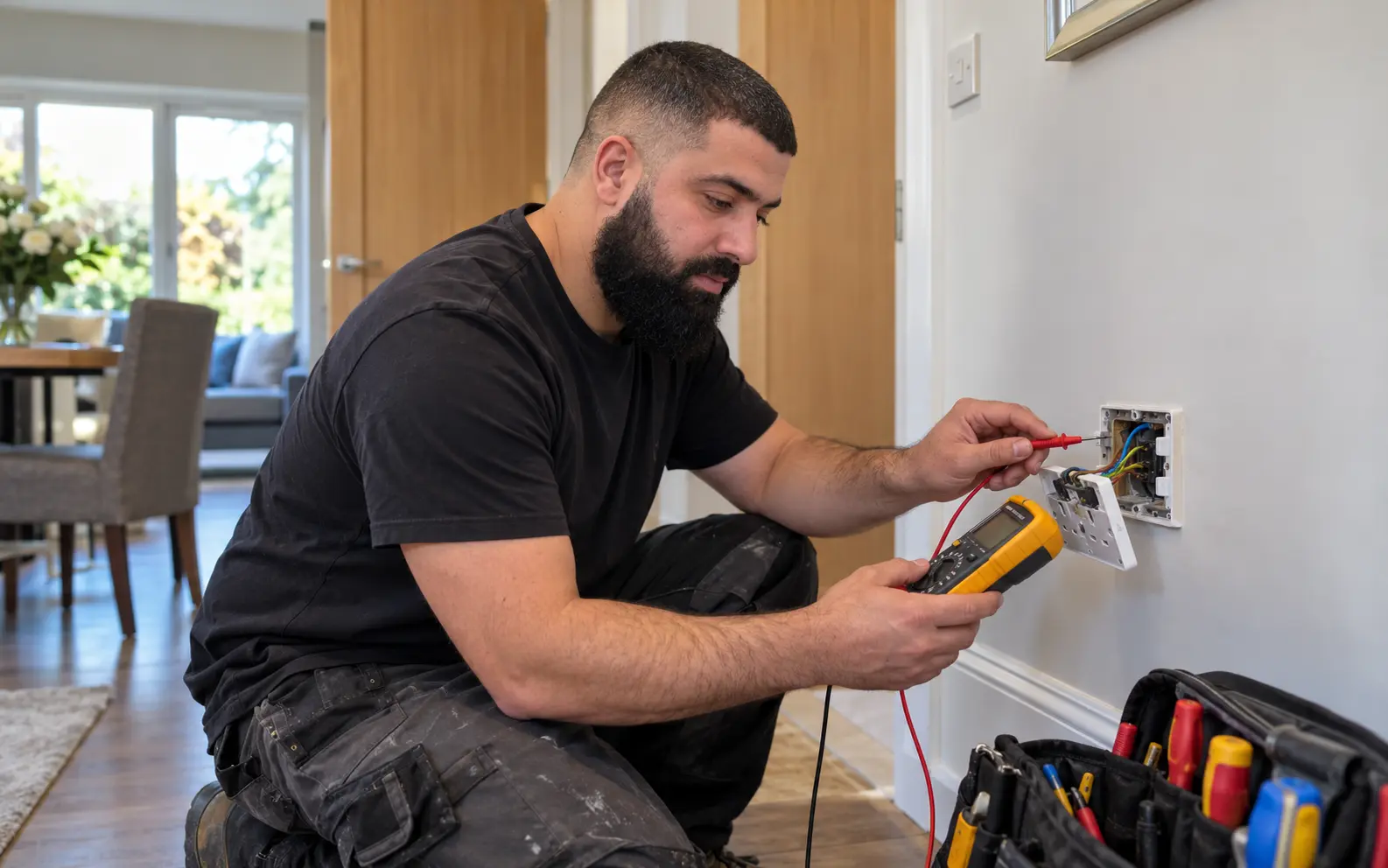
What Electrical Faults Can We Investigate?
People often search for an electrician after noticing a symptom rather than knowing the cause. Testing is used to establish what is happening before unnecessary parts or larger sections of the installation are replaced.
RCD or breaker keeps tripping
Repeated tripping can be associated with an appliance, moisture, damaged wiring or another circuit fault. Repeatedly resetting a protective device without understanding why it operates is not a diagnosis.
Partial power loss
If one room or group of circuits loses power while the rest of the property remains live, the problem may be limited to a particular circuit or connection and needs to be traced.
Sockets or switches not working
A failed accessory, connection problem or circuit fault can leave individual sockets or switches intermittent or completely inoperative.
Flickering or dimming lights
The cause may be as simple as a lamp or fitting, but persistent flickering can also require investigation of connections, controls or the supplying circuit.
Intermittent electrical faults
Problems that appear and disappear can take careful testing to locate, particularly where moisture, a loose connection or a particular item of equipment is involved.
Warm, buzzing or damaged accessories
Unusual heat, buzzing, discoloration or visible damage should not be ignored. These symptoms may require prompt professional assessment.
Diagnosis before replacement
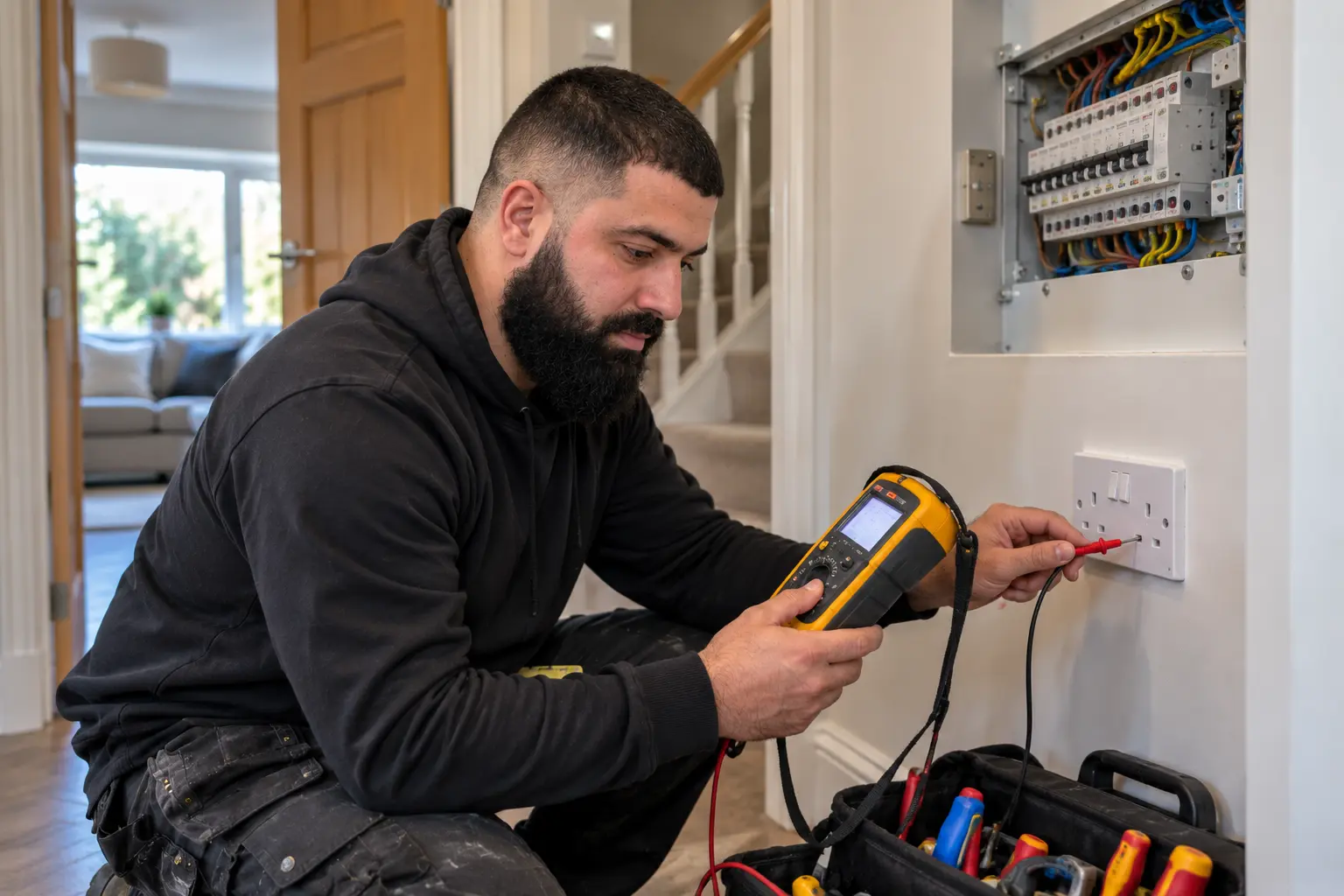
How Electrical Fault Finding Works
A fault-finding visit starts with the symptoms: what stopped working, when the problem began, whether a protective device operated and whether the issue is constant or intermittent.
The electrician can then inspect the relevant parts of the installation and use appropriate electrical test equipment to narrow down the affected circuit and locate the likely cause. Electrical components are worked on using appropriate safe-isolation procedures rather than assuming that switching something off makes it safe.
Once the cause is identified, the findings can be explained and the repair discussed. This avoids treating every trip, failed socket or lighting problem as evidence that the property automatically needs major electrical work.
A structured approach
Our Fault-Finding Process
Discuss the symptoms
We establish what is affected, when the fault occurs and any useful history such as recent electrical work, water ingress or equipment changes.
Inspect and isolate
The relevant installation is visually assessed and the affected circuit is safely isolated where required before intrusive investigation or repair.
Test systematically
Appropriate electrical test instruments are used to narrow the problem rather than replacing components by trial and error.
Locate the cause
The aim is to identify whether the issue lies with an accessory, appliance, protective device, connection, cable or another part of the circuit.
Explain the findings
We explain what has been found and what repair or further work is appropriate before proceeding with additional work.
Repair and test
Where an agreed repair is carried out, the affected work is checked and tested as appropriate before the job is completed.
Targeted electrical repairs
Repair the Fault — Not More Than Necessary
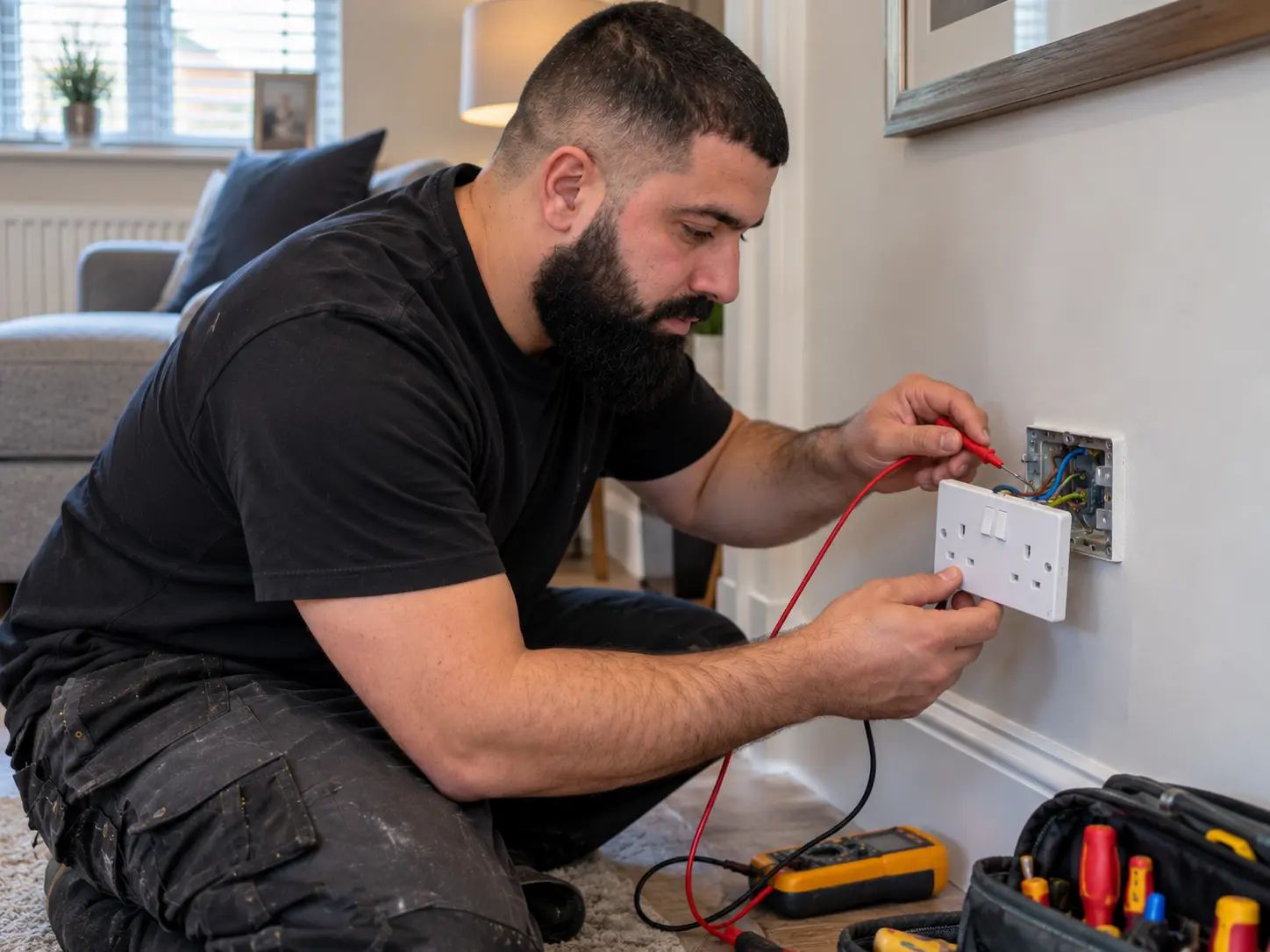
Once a fault has been identified, the solution depends on its cause. A repair may involve an electrical accessory, a damaged connection, part of a circuit or another specific component. More extensive work should only be considered where the condition of the installation justifies it.
A tripping circuit does not automatically mean that you need a new consumer unit, and an isolated electrical fault does not automatically mean that your home needs rewiring.
If testing identifies a problem specifically with the distribution equipment, see our Consumer Unit Replacement Ealing page. Where broader wiring deterioration is identified, our separate House Rewiring Ealing page explains that scope of work.
Fault finding or an EICR?
Electrical Fault Diagnosis Is Different From an EICR
Fault finding is usually focused on a specific symptom: for example, a circuit that keeps tripping, a group of sockets that has stopped working or an intermittent lighting problem. The investigation follows that fault to establish its cause.
An Electrical Installation Condition Report in Ealing has a different purpose. An EICR assesses and reports on the condition of the wider fixed electrical installation rather than simply diagnosing one reported fault.
Preparing for a visit
Useful Information Before Fault Finding
You do not need to diagnose the fault yourself. However, a few observations can help explain the symptoms: which room or circuit is affected, whether an RCD or breaker has operated, when the problem started, whether it happens continuously or only occasionally, and whether any recent work or water ingress preceded it.
Need Help With an Electrical Fault?
Tell us your Ealing postcode and what you have noticed. Photos of visible damage can be useful where they can be taken safely without opening electrical equipment.
Cost & scope
What Affects the Cost of Electrical Fault Finding?
The amount of diagnostic work required depends on the fault. Some problems can be narrowed down quickly; intermittent faults or issues involving several circuits can require more investigation. The final cost can also depend on whether replacement parts or additional remedial work are required after diagnosis.
For that reason, we do not assume the repair before the cause has been established. Contact us with the symptoms and property details so we can discuss the likely starting point.
Local fault finding
Electrical Repairs Across Ealing, W5 & W13
We provide domestic electrical fault finding and repairs across Ealing, including Ealing Broadway, West Ealing, South Ealing, Ealing Common and Northfields. The page is focused specifically on diagnosing and repairing electrical faults rather than general electrical installation work.
For broader household electrical services, see our Domestic Electrician Ealing page.
When to arrange fault finding
When Should You Call an Electrician?
Repeated tripping
A protective device that repeatedly operates should be investigated rather than continually reset without establishing why it is tripping.
Part of the property loses power
If particular sockets, lights or circuits stop working while other areas remain powered, professional testing can help locate the affected circuit and the cause.
An intermittent electrical problem
Faults that appear and disappear can be difficult to trace without systematic testing. Note when the problem occurs and arrange fault finding rather than dismantling accessories yourself.
Frequently asked questions
Electrical Fault Finding FAQs
Why does my RCD or circuit breaker keep tripping?
A protective device may operate because of a fault such as leakage to earth, an appliance problem, moisture, damaged wiring or another circuit issue. Repeated tripping should be investigated rather than continually reset without identifying the cause.
Does a tripping RCD mean I need a new consumer unit?
No. The reason for the trip should be diagnosed first. Consumer-unit replacement is a separate scope and is only appropriate where the equipment or wider installation assessment indicates it is required.
Can you investigate sockets that have stopped working?
Yes. Fault finding can be used to trace failed or intermittent sockets and establish whether the problem is with the accessory, a connection or the supplying circuit.
What causes lights to flicker?
There are several possibilities, from a lamp or fitting problem to a loose connection or circuit issue. Persistent or unexplained flickering should be properly investigated rather than assuming a single cause.
Is fault finding the same as an EICR?
No. Fault finding is normally directed at a specific reported problem. An EICR is a broader inspection and report on the condition of the fixed electrical installation.
Does an electrical fault mean my house needs rewiring?
Not necessarily. Many faults are localised and can be repaired without rewiring the whole property. Wider rewiring should only be considered where inspection and testing identify broader deterioration or unsuitable wiring.
How long does electrical fault finding take?
It depends on the nature of the fault. Straightforward issues may be located relatively quickly, while intermittent problems or faults involving several circuits can require more systematic testing.
Can the electrical fault be repaired during the same visit?
Where the cause can be identified and the appropriate repair can be carried out safely with the required materials available, this may be possible. Some faults require additional work, parts or further investigation, so this cannot be guaranteed before diagnosis.
What should I do if I smell burning or see smoke?
Treat burning smells, smoke or visible overheating as an urgent safety issue rather than routine fault finding. If it is safe to do so, stop using the affected equipment and use our Emergency Electrician Ealing service for urgent electrical problems.
Related electrical services
Related Services in Ealing
Discuss Your Electrical Fault
Tell us what is happening, which part of the property is affected and your Ealing postcode. We can discuss the appropriate next step for diagnosis and repair.