Is my old fuse box unsafe?
Not necessarily. Age is not a diagnosis. The condition of the board, protective measures and the installation it serves need to be considered together.
Need a consumer unit or fuse box replacement in Ealing? We can assess the existing board and installation, discuss whether replacement is genuinely appropriate, and quote for a modern consumer unit with the protection suited to the installation.
Assessment • Replacement • Testing • Clear quotation
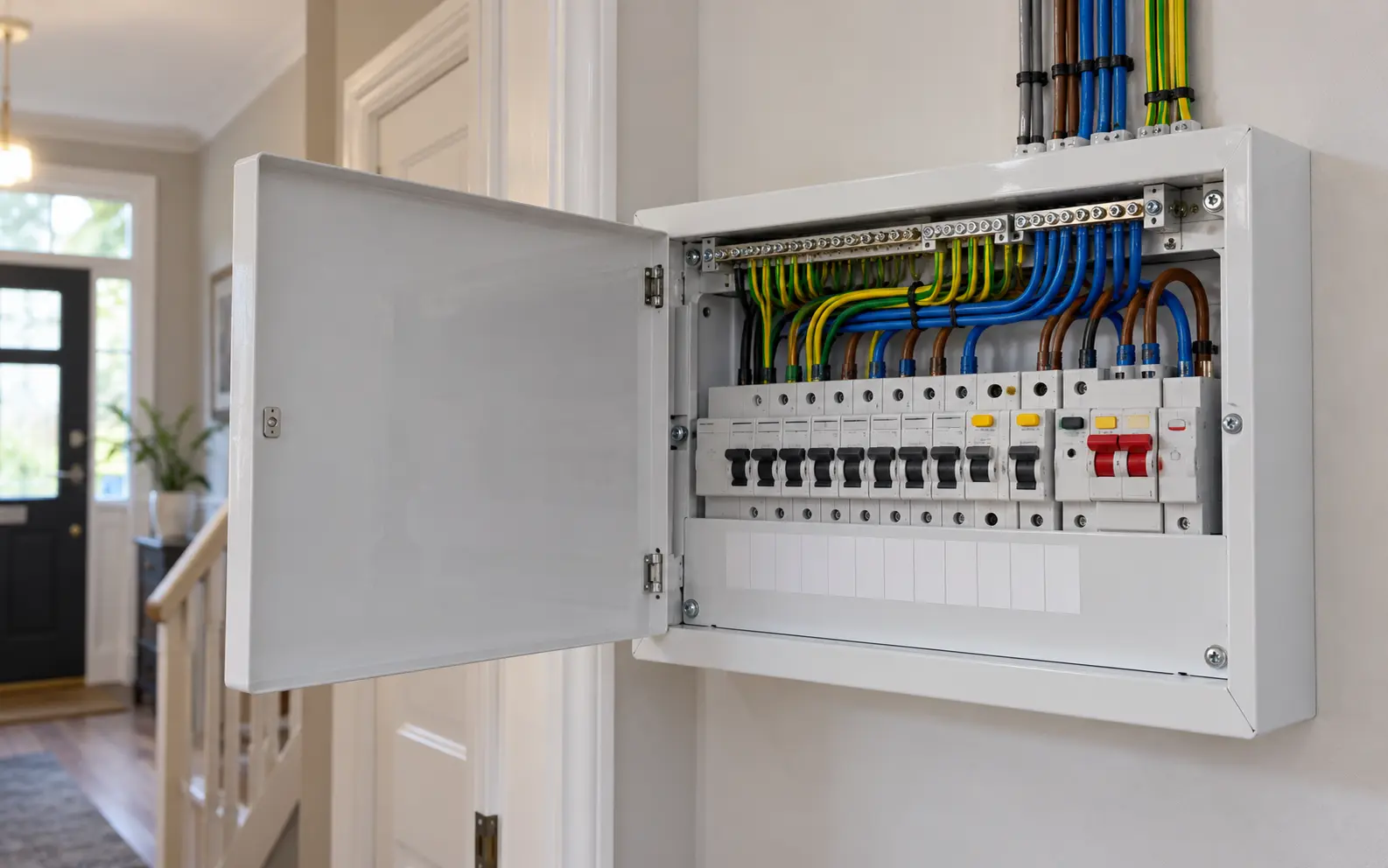
An older fuse box or plastic consumer unit is not automatically illegal or unsafe simply because it is old. Its condition, location, protective devices, earthing and bonding, and the wider installation all matter. A sensible recommendation should be based on what is actually present rather than assuming every older board needs an immediate upgrade.
Replacement may be appropriate where assessment identifies deterioration, damage, overheating, unsuitable components, inadequate protection for proposed alterations, an unsuitable enclosure arrangement, or a board that cannot safely accommodate required changes. If you need the condition of the wider installation assessed rather than a replacement quotation, see our EICR in Ealing service.
Not necessarily. Age is not a diagnosis. The condition of the board, protective measures and the installation it serves need to be considered together.
No blanket rule makes every existing plastic consumer unit illegal. A replacement installed today should meet current enclosure requirements, but an existing plastic unit must be assessed on its circumstances and condition.
The presence of rewireable fuses alone does not prove an installation is unsafe. The actual protection, condition and suitability of the installation should be assessed before deciding what improvement is justified.
A clear photo with the cover closed, plus one showing the surrounding space, can help us understand the existing setup before preparing a quotation.
The consumer unit is the central assembly that distributes the incoming electrical supply to the property's individual circuits and contains switching and protective devices. Many customers still call it a fuse box or fuse board; we use those familiar terms here unless referring specifically to an older fuse-based board.
A modern replacement is designed around the current installation and the protection it requires. The exact arrangement is not a one-size-fits-all package.
Residual-current protection disconnects the supply when the conditions for operation are met. The correct type and arrangement depend on the installation and connected equipment.
An RCBO combines residual-current and overcurrent protection for an individual circuit. Individual RCBOs can reduce the number of unrelated circuits affected by one residual-current fault.
A modern replacement may include surge protection against transient overvoltages. Whether and how SPD protection is required is determined as part of the design under current BS 7671 requirements.
AFDD requirements depend on the premises and circuit design. They are required in defined higher-risk circumstances and should not be presented as compulsory in every ordinary home.
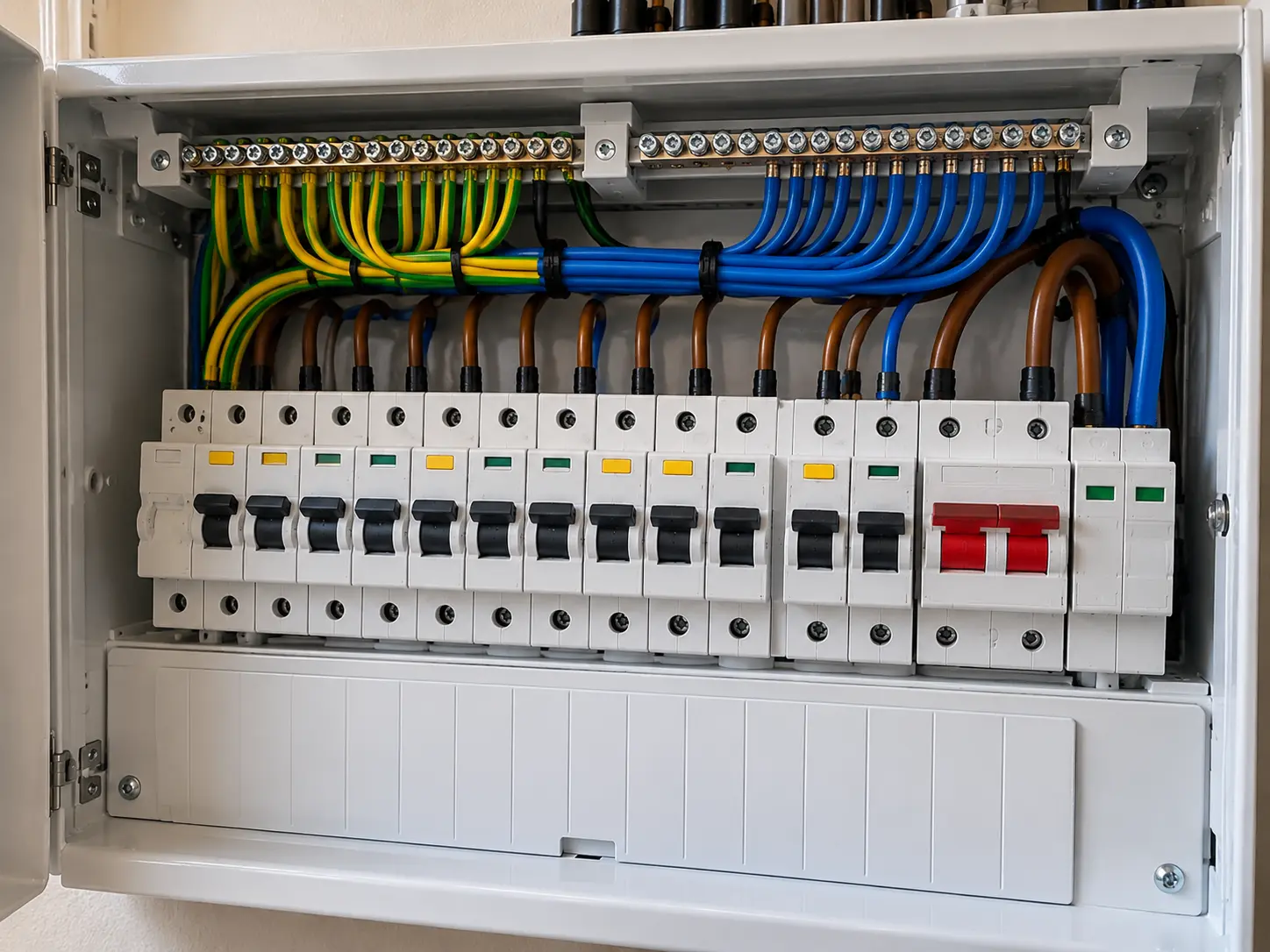
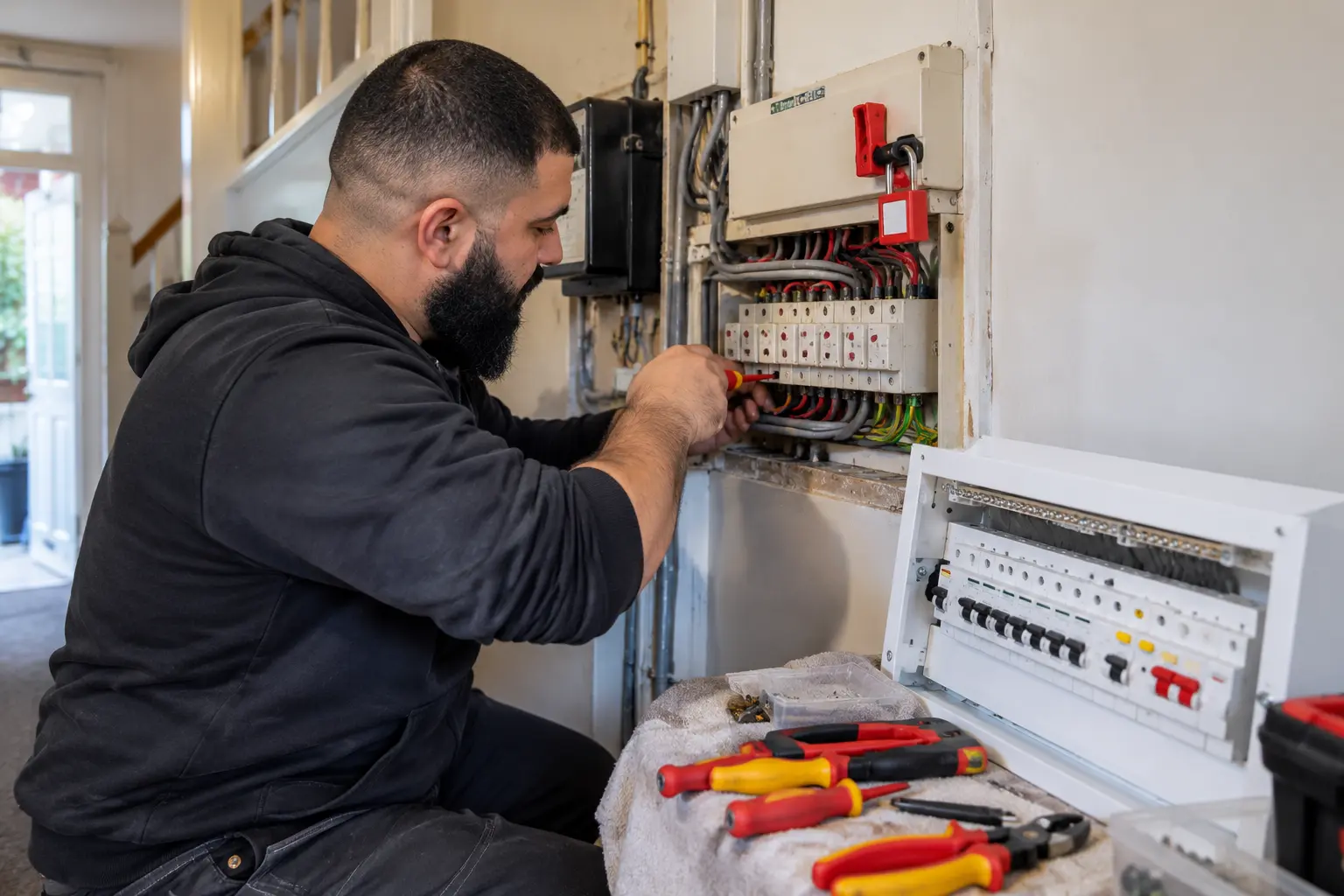
A consumer unit replacement is more than swapping one box for another. The existing installation has to be considered, the supply safely isolated, circuits connected to the new protective arrangement, and the altered installation appropriately inspected and tested. The electricity will need to be switched off during relevant stages of the work.
We review your property details, photographs, likely circuit count, board type, location and any known issues.
The supply arrangement, consumer-unit location, earthing, relevant bonding and suitability of existing circuits for the proposed work need to be considered.
The supply is safely isolated, the old board is removed and the replacement enclosure and protective devices are installed for the agreed design.
Existing circuits are connected to the appropriate protective devices and the work is inspected and tested before completion.
The time required varies with circuit count, access, existing wiring condition, earthing and bonding, testing and any defects discovered, so we do not use one fixed completion time for every property.
Consumer unit replacement in a dwelling in England is Part P notifiable work. The work also requires appropriate inspection and testing. Your quotation should make clear how Building Regulations notification will be handled and what certification/documentation will be provided through the applicable compliance route.
For relevant installation work, the appropriate BS 7671 document is an Electrical Installation Certificate (EIC). That is different from an Electrical Installation Condition Report (EICR), which is a periodic condition report on an existing installation. A board replacement should not be described as automatically including a “free EICR” unless a separate periodic inspection is genuinely being carried out.
The altered installation and circuits being connected to the replacement require appropriate verification so the new work can be assessed safely.
The appropriate installation certificate records the work and associated inspection and test results. It should not be confused with an EICR or given an invented five-year expiry period.
There are different legitimate compliance routes for notifiable work. The important point is that the route used and the documentation you will receive are clear before work begins.
We do not publish an artificial “from” price because the quotation depends on the actual installation and agreed specification. Two properties can need very different board capacities, protective-device arrangements, testing and remedial work.
Factors that can affect the quotation include:
Consumer unit replacement enquiries can be assessed across Ealing, including W5 and W13 and areas such as Ealing Broadway, West Ealing, South Ealing, Ealing Common and Northfields. Send your full postcode and photographs of the existing board so the installation and access can be considered before a quotation is prepared.
For other electrical work around the home, see our Domestic Electrician Ealing services. For business premises and commercial distribution-board work, see our Commercial Electrician Ealing service.
Not merely because of its age. The condition, location, protective devices, earthing and bonding, and the wider installation should be assessed before deciding whether replacement is warranted.
Some older boards may remain suitable for continued use, while others have defects or inadequate protection that justify improvement. The correct answer depends on the actual installation rather than age alone.
No blanket rule requires every existing plastic consumer unit to be replaced. Current requirements for a new replacement are different from the assessment of an existing installation.
Yes, in many installations. A consumer-unit change and a house rewire are different jobs. However, inspection and testing can reveal existing circuit defects that need separate remedial work.
Yes. Safe replacement requires electrical isolation, so you should expect interruption to the electrical supply during relevant stages of the work.
There is no reliable universal duration. Circuit count, access, existing wiring condition, earthing and bonding, testing and any defects found all affect the time required.
Appropriate inspection and testing are necessary to verify the altered installation and the circuits being connected to the new protective arrangement. That should not automatically be described as a full EICR.
The defect should be explained and any additional work agreed. Some issues can be remedied as part of an agreed revised scope; others may require separate fault finding before the replacement proceeds.
Consumer-unit replacement is installation work for which the appropriate BS 7671 certification should be provided. The Electrical Installation Certificate is different from an EICR, which is a periodic condition report.
Yes. Replacement of a consumer unit in a dwelling in England is Part P notifiable work. The quotation should make clear the compliant notification route and what Building Regulations documentation will be provided.
An RCD provides residual-current protection. An RCBO combines residual-current protection with overcurrent protection for an individual circuit, allowing circuits to have their own combined protective device where the design uses that arrangement.
Surge protection is considered under the current BS 7671 design requirements. Whether and how SPD protection is required depends on the installation and should not be treated as an unconditional add-on detached from the design.
AFDD requirements depend on the type of premises and circuit design. They are required in defined circumstances and considered or recommended more broadly under current requirements, rather than being compulsory in every ordinary home.
The price depends on circuit count, board specification, protective devices, condition of the existing installation, earthing and bonding, access, testing and any remedial work. Send photographs and property details for a quotation based on the actual installation.
Consumer unit replacement should stay focused on the board and the installation work directly associated with it. If assessment or testing identifies a different scope, the relevant service can be considered separately.
Send your W5/W13 postcode, property type and clear closed-cover photographs of the existing board and surrounding space.
You can also tell us about known faults, recent reports or planned new circuits.
Domestic and commercial electrical work, from repairs and upgrades to complete installations.